
Decapsulated Brine Shrimp Eggs (Non-Hatching)
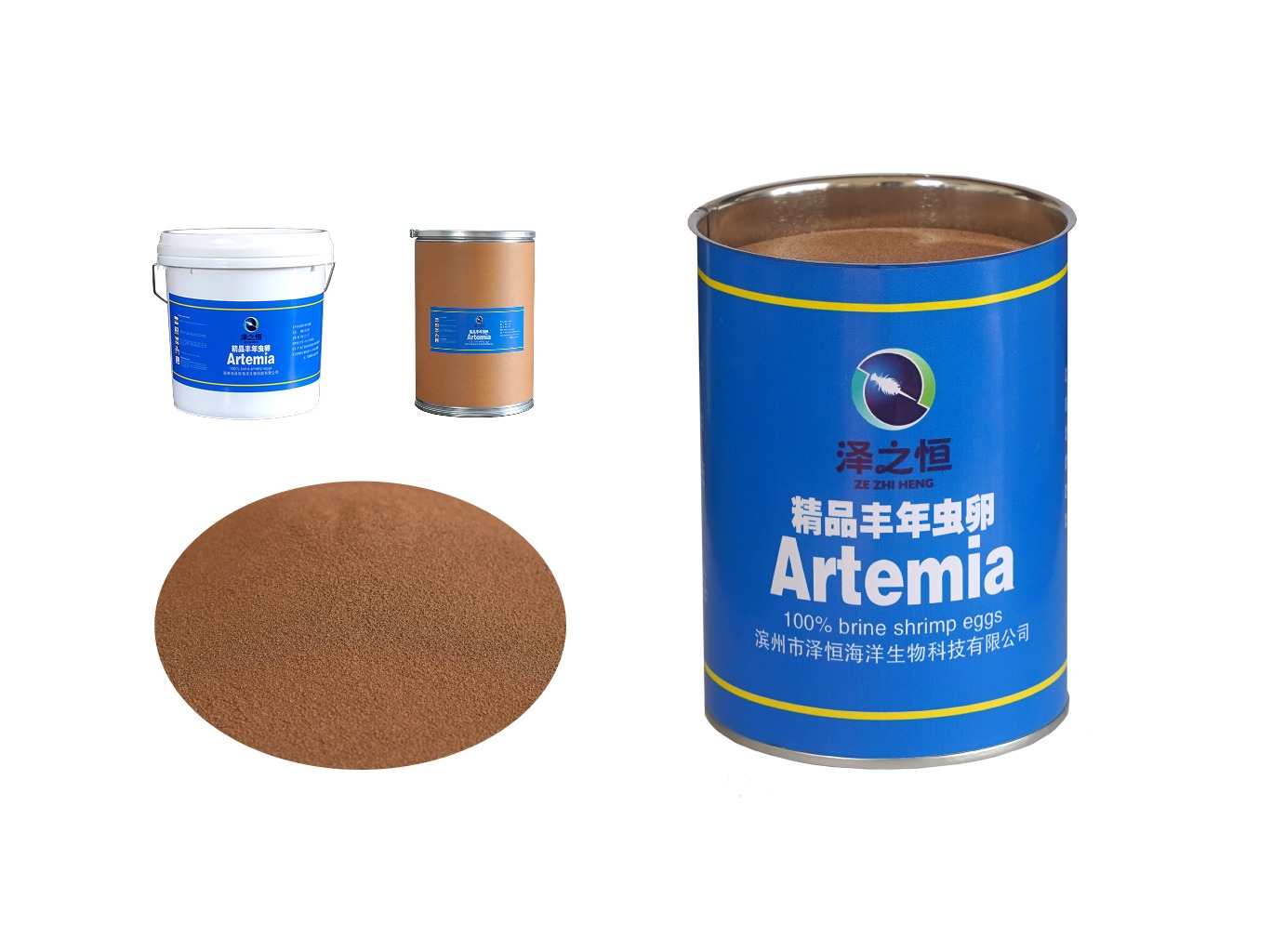
Product Overview
Decapsulated Brine Shrimp Eggs (Non-Hatching) are produced from high-quality brine shrimp cysts harvested from salt lakes. Through strictly controlled decapsulation, neutralization, rinsing and drying processes, the hard outer shell is removed and only the embryo rich in protein and lipids is retained.
The product is supplied as a dry fine granule or powder, which can be fed directly or after rehydration. No hatching equipment or dedicated staff are required.
Compared with traditional hatch-required brine shrimp eggs, this product offers:
No hatching needed – ready to use, simplified operation
Shells removed – high digestibility, less residue
Powder / fine granule form – compatible with automatic feeders and feed production lines
Batch traceability – suitable for farms, feed mills and aquatic retailers with long-term, stable usage
This product is positioned as a standardized ingredient for professional use and is suitable for ornamental fish farms, aquaculture farms, aquatic retail chains, aquatic feed manufacturers and research institutes.
Target Species & Application Scenarios
1. Ornamental fish farms and aquatic retail chains
High-protein daily diet for guppies, tetras, cichlids, goldfish, koi juveniles and other species
Routine maintenance, holding and short-term conditioning before sale
No hatching system required, easy to standardize procedures across new sites and multi-store chains
2. Intensive aquaculture farms / hatcheries
Frequent small-portion feeding for fry and larvae of fish, shrimp and crab
Reduces the risk of feed interruption caused by hatchery system failures
Can be combined with micro-pellets and compound feeds to improve palatability and feeding response
3. Aquatic feed mills / premix and specialty feed manufacturers
Used as an animal protein source and natural attractant in high-grade fish and shrimp feeds
Easy to dose into extruded, pelleted or gel feeds
Low batch-to-batch variation in nutrition, suitable as a long-term ingredient in fixed formulations
4. Universities, research institutes and laboratories
Standard diet for experimental fish and crustacean models
No need to build and maintain a hatching system, convenient for teaching and long-term trials
Technology & Advantages
1. Decapsulation principle
Dormant brine shrimp cysts are selected as raw material.
The outer shell is dissolved and removed using an oxidizing solution under precisely controlled concentration and exposure time.
The product is neutralized and rinsed several times to remove residual chemicals.
Low-temperature drying and sieving yield a uniform decapsulated product.
Decapsulated brine shrimp eggs lose their ability to hatch, but retain a nutritional profile close to that of freshly hatched nauplii and can be directly consumed by fish and shrimp.
2. Comparison with traditional hatching of brine shrimp eggs
Operation
Traditional eggs: require brine preparation, aeration, temperature and light control, 24–36 h hatching, separation of nauplii and shells.
Ready-to-use decapsulated eggs: ready immediately after opening, only weighing and feeding are required.
Water quality and leftovers
Traditional hatching: large amounts of empty shells float or settle, easily causing filter blockage and bottom deposition.
Decapsulated eggs: shells are removed, animals digest the product easily, and solid waste is significantly reduced, helping to maintain cleaner water.
Nutrient utilization and stability
Traditional hatching: nauplii consume part of their energy during hatching and swimming.
Decapsulated eggs: fish and shrimp ingest the embryo directly, energy is more concentrated and the effective utilization of each unit of feed is improved.
3. Product advantages
Low nutritional variation – raw material grading and process control reduce batch-to-batch variation in key indicators such as protein and fat, making long-term purchasing and formulation easier.
Controlled particle size – particle sizes are adjusted for fry and small fish feeding, improving feeding efficiency and suspension time.
Automation-friendly – good flowability and low caking tendency, suitable for automatic feeders and dosing systems.
Complete documentation – batch test reports (COA) and related compliance documents can be provided to support feed manufacturers and farms in registration and audit processes.
Nutritional Composition & Physical Properties
The following values are typical ranges. Please refer to the COA of each batch for exact data.
1. Main nutritional indicators (on dry matter basis)
Crude protein: approx. ≥ 58–60%
Crude fat: approx. ≥ 10–15%
Crude ash: approx. ≤ 5–8%
Moisture: approx. ≤ 8–10%
2. Physical properties
Form: fine granules / powder
Color: light brown to orange-brown
Particle size: suitable for fry and small ornamental fish, with good suspension in water
Dispersibility: quickly wets after entering the water and remains suspended for a period of time, allowing active feeding and reducing rapid sinking losses
Directions for Use
1. Direct dry feeding
Recommended for: ornamental fish shops, home aquaria, certain grow-out tanks.
Steps
Estimate the amount per feeding based on fish number and biomass.
Sprinkle the product evenly over the water surface.
Adjust the feeding rate so that most of the feed is consumed within 5–10 minutes. If there is obvious leftover on the bottom, reduce the next feeding.
2. Feeding after rehydration
Recommended for fry, larvae, smaller animals or cautious feeders.
Steps
Add the required amount of product into clean culture water.
Let it soak for 5–10 minutes so that the particles are fully hydrated and evenly dispersed.
Slowly pour the suspension along the water surface or tank edge so that the feed forms a “cloud” in the water column.
3. Use as a feed ingredient
Recommended for feed mills, premix producers and farms making in-house feeds.
Suggested inclusion rate: about 3–10% of the total diet, adjustable according to species, growth stage and cost target.
Can be combined with fish meal, shrimp meal and other protein sources to enhance palatability and daily feed intake.
In extrusion or pelleting, avoid excessive temperature and residence time to protect heat-sensitive nutrients.
4. Example species and stages
Tropical ornamental fish: guppies, tetras, angelfish, cichlids, etc.
Goldfish and koi juveniles and medium-size fish
Marine ornamental fish juveniles and small marine species
Larvae of shrimp, crab and other crustaceans
Adult or ornamental fish requiring high-protein attractant feeds
Economic & Management Advantages
1. Reduced equipment and maintenance costs
No need for hatching cones, air pumps, lighting or dedicated hatching rooms and staff, which lowers both initial investment and ongoing maintenance expenses.
2. Reduced labor and time costs
Eliminates steps such as brine preparation, nauplii collection and shell washing, reducing manual operations and potential errors, allowing staff to focus on water quality management and routine inspection.
3. Stable and controllable feeding program
Ready-to-use products are far less affected by external factors such as temperature, power outages or hatching water quality, minimizing feed interruption risks and supporting stable production planning.
4. Easier standardization
Combined with weighing tools and feeding protocols, clear records of feeding and consumption can be maintained, which is helpful for cost accounting and production management.
Quality Control & Testing
1. Raw material control
Brine shrimp cysts are sourced from established salt lake production areas.
Incoming raw material is tested for moisture, impurities and basic nutritional indicators.
Non-conforming lots are rejected before processing.
2. Process control
Critical steps such as decapsulation, neutralization, rinsing, desalting and drying are run under strict process parameters.
Sampling and testing are carried out at multiple points to ensure that nutrition, particle size, moisture and hygiene indicators meet internal standards.
The production environment is kept clean to avoid cross-contamination.
3. Final testing and documentation
Each batch is released only after passing quality inspection.
Main test items include: moisture, crude protein, crude fat, ash and microbiological limits.
Frequently Asked Questions (FAQ)
1. Raw material control
Brine shrimp cysts are sourced from established salt lake production areas.
Incoming raw material is tested for moisture, impurities and basic nutritional indicators.
Non-conforming lots are rejected before processing.
2. Process control
Critical steps such as decapsulation, neutralization, rinsing, desalting and drying are run under strict process parameters.
Sampling and testing are carried out at multiple points to ensure that nutrition, particle size, moisture and hygiene indicators meet internal standards.
The production environment is kept clean to avoid cross-contamination.
3. Final testing and documentation
Each batch is released only after passing quality inspection.
Main test items include: moisture, crude protein, crude fat, ash and microbiological limits.
Frequently Asked Questions (FAQ)
Q1: Can Decapsulated Brine Shrimp Eggs (Non-Hatching) completely replace live brine shrimp?
A: In most ornamental fish culture and grow-out applications, Decapsulated Brine Shrimp Eggs (Non-Hatching) can supply the majority of high-protein nutrition while greatly simplifying daily operations. For extremely picky feeders or critical breeding stages, they can be used together with live brine shrimp or frozen feeds to combine nutritional and behavioral benefits.
Q2: Will this product affect water quality?
A: The shells have been removed and the product is easily digested, so the amount of hard, indigestible residue is much lower than with traditional brine shrimp eggs. Under reasonable feeding rates and normal filtration and water-change routines, it generally does not cause significant deterioration of water quality. If excessive leftovers are observed on the bottom, adjust the feeding rate and frequency.
Q3: How is this product different from ordinary decapsulated brine shrimp eggs on the market?
A: This product is optimized for professional use in terms of raw material grading, particle size control, microbiological control, batch testing and packaging options. It emphasizes nutritional stability, hygiene and compatibility with automated and industrial feeding systems, making it suitable for long-term use by farms, feed mills and aquatic retail chains.
Q4: Are samples and technical support available?
A: Trial-size samples can be provided for formulation testing or small-scale trials. Feeding programs and formulation suggestions can be offered according to your culture system and production targets. For large-volume cooperation, we can also support periodic technical communication and performance tracking.
 English
  Español
  Tiếng Việt
  Bahasa Indonesia
  ไทย
ไทย  Bahasa Melayu
  বাংলা
বাংলা  Nederlands
  Italiano
  Français
  Deutsch
  العربية