Introduction
When you hatch brine shrimp eggs, light is one of the first things many people ask about.
Some users place a lamp beside the hatchery for 24 hours. Some keep the hatching cone near a window. Others hatch Artemia cysts in a room with only normal indoor light and still get nauplii. This leads to a common question:
Do brine shrimp eggs need constant light to hatch?
The practical answer is: constant light is helpful and often recommended, but it is not the only factor that determines hatching success. Brine shrimp eggs may hatch without perfect lighting, but stable illumination can improve hatch uniformity, make the process more predictable, and help newly hatched nauplii gather for easier harvesting.
For aquarium users, hatcheries, fish farms, shrimp farms, and live-feed suppliers, the goal is not simply to “turn on a light.” The real goal is to create a stable hatching environment where temperature, salinity, oxygen, egg density, and egg quality work together.
This guide explains how light affects brine shrimp egg hatching, whether constant light is necessary, and how to set up a more reliable hatching process.
The Short Answer: Constant Light Helps, but It Is Not Magic
Brine shrimp eggs, also called Artemia cysts, hatch when they are placed in suitable saltwater and exposed to the right environmental conditions. Light is one of those conditions, but it does not work alone.
In practical hatching systems, continuous illumination during incubation is commonly recommended, especially when users want faster and more consistent hatching. A simple LED or fluorescent lamp near the hatching container is usually enough for small-scale use. Commercial or laboratory-style hatching systems often use stronger and more standardized lighting.
However, if your temperature is too low, salinity is incorrect, oxygen is poor, or the eggs have been stored badly, constant light will not solve the problem by itself.
A good way to understand it is this:
Light helps trigger and support hatching, but temperature, aeration, salinity, and egg quality decide whether the hatch is actually successful.
Why Light Matters During Brine Shrimp Egg Hatching
Light can support brine shrimp hatching in several practical ways.
First, light acts as an environmental signal. Artemia cysts are dormant embryos. Once they are hydrated in saltwater, the embryo resumes development. Light can help stimulate this process and make hatching more synchronized.
Second, newly hatched brine shrimp nauplii are strongly attracted to light. This behavior is called positive phototaxis. After hatching, nauplii naturally swim toward a light source. This is useful because it helps users separate live nauplii from empty shells, unhatched eggs, and debris.
Third, light makes observation easier. When the hatchery is well lit, you can see whether the water contains moving orange nauplii, floating shells, or settled unhatched cysts. For commercial users, this helps reduce mistakes during harvesting.
So while light may not be the only requirement, it plays a useful role from incubation to collection.
Do Brine Shrimp Eggs Hatch in the Dark?
Yes, brine shrimp eggs may still hatch in darker conditions, depending on the quality of the eggs and the rest of the hatching environment.
But hatching in the dark is usually less predictable. The hatch may be slower, less uniform, or harder to judge. For small aquarium users, this may only mean waiting longer. For hatcheries and farms, however, inconsistent hatching can affect feeding schedules, larval survival, and daily production planning.
That is why many practical hatching guides recommend using light during the entire incubation period.
If your goal is only to hatch a small amount for occasional fish feeding, normal room light or a small lamp may be enough. If your goal is stable production for fish fry, shrimp larvae, or commercial live-feed supply, continuous light is a better choice.
What Kind of Light Is Best for Hatching Brine Shrimp Eggs?
You do not need a complicated lighting system for most hatching setups.
For common aquarium and small hatchery use, these options are usually suitable:
- White LED lamp
- Fluorescent lamp
- Desk lamp placed near the hatchery
- Hatchery room lighting with enough brightness
The light should be bright enough to illuminate the hatching water, but it should not overheat the container. Many hatching problems blamed on “too much light” are actually caused by temperature spikes from hot lamps or direct sunlight.
Avoid placing the hatchery under strong direct sun for long periods. Sunlight can heat the water unevenly, increase temperature fluctuations, and make the hatch less stable.
A cool white LED light is often a practical choice because it provides steady illumination without adding too much heat.
How Long Should the Light Stay On?
For most hatching purposes, keeping the light on during the full incubation period is recommended.
Brine shrimp eggs usually hatch within 24–36 ore under suitable conditions. Some batches may hatch faster, while others may take longer depending on temperature, egg origin, storage, and cyst quality.
A simple lighting schedule is:
Keep the light on continuously from the time you add the eggs until harvest.
This does not mean the light must be extremely strong. It simply means the hatchery should not be kept in complete darkness during incubation if you want more predictable results.
Once hatching is complete, you can also use a focused light source to attract nauplii to one side of the container. Then you can siphon or collect the live nauplii more easily.
Light Is Important, but Temperature Is Often More Important
Many users think their brine shrimp eggs failed because they did not use enough light. In reality, temperature is often the bigger problem.
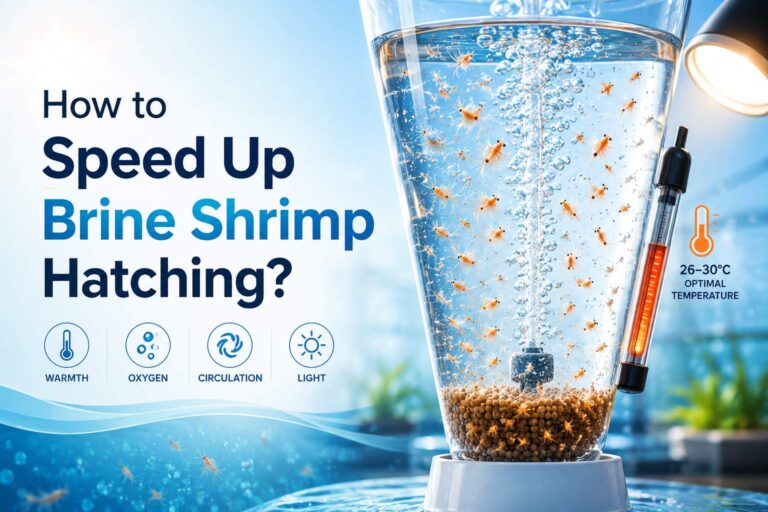
Brine shrimp eggs hatch faster in warm water. For many hatching systems, a practical target temperature is around 26–28°C / 80–82°F. If the water is too cold, the eggs may still hatch, but the process can become slow and uneven. If the water is too hot, hatching may become unstable and nauplii may be weaker.
This is why some people believe that “light made the eggs hatch faster,” when in fact the lamp also warmed the water.
Light and temperature are connected in many small hatching setups. A warm lamp can increase both illumination and water temperature. But for better control, it is safer to use a thermometer and maintain temperature directly instead of relying only on lamp heat.
For stable results, especially in hatcheries, temperature should be controlled separately from lighting.
Aeration: The Condition That Cannot Be Ignored
If brine shrimp eggs settle at the bottom of the container, many of them may not hatch well. They need oxygen, and they need to remain suspended in the water.
Strong, continuous aeration helps in two ways:
It supplies oxygen for developing embryos and newly hatched nauplii.
It keeps the eggs moving so they do not collect in dead zones.
For bottle hatcheries and conical tanks, air should be strong enough to keep the cysts circulating. If eggs gather at the bottom, corners, or surface, the airflow may be too weak or uneven.
For commercial hatching, aeration is often more critical than light. A bright hatchery with poor aeration can still produce weak or disappointing results.
Salinity Also Affects Hatch Rate
Brine shrimp eggs need saltwater to hatch. If the salinity is too low or too high, the hatch rate may decline.
A practical hatching range for many users is around 25–35 g/L salt, although different protocols and Artemia strains may use slightly different salinity levels. For aquarium users, non-iodized salt or marine salt mix is commonly used.
When hatching for aquaculture production, it is better to use a consistent formula instead of guessing by spoon measurement. Weighing salt by grams and measuring water by liters gives more repeatable results.
If you change salinity, temperature, and light at the same time, it becomes difficult to know what caused the hatching problem. Keep your setup consistent and adjust one factor at a time.
Does Light Affect Decapsulated Brine Shrimp Eggs?
Decapsulated brine shrimp eggs have had the hard outer shell removed while the embryo remains viable. Because the shell is removed, they produce cleaner hatching water and reduce the problem of empty shells.
Like regular shell-on cysts, decapsulated eggs still need suitable temperature, salinity, oxygen, and light for reliable hatching.
Light can still help stimulate the hatching process and make nauplii easier to collect. However, because decapsulated eggs are more exposed than shell-on eggs, users should be careful with water quality, handling, and storage.
For best results, follow the supplier’s recommended hatching conditions for the specific batch, especially if the eggs are intended for hatchery-scale production.
Common Mistakes When Using Light for Brine Shrimp Hatching
Mistake 1: Using Light but Ignoring Temperature
A lamp beside the hatchery is useful, but it does not replace temperature control. If the water is too cold, the hatch may be delayed. If the lamp overheats the water, nauplii may become weak or die quickly.
Always check the water temperature, not just the room temperature.
Mistake 2: Keeping the Hatchery in Direct Sunlight
Sunlight can provide strong illumination, but it can also cause unstable heating. A hatchery near a window may become too hot during the day and too cool at night.
Stable indoor lighting is usually safer than direct sun.
Mistake 3: Thinking More Light Always Means Better Hatch
Very strong light is not always better. Excessive heat and unstable water conditions can reduce hatch performance. A steady, moderate light source is usually enough.
Mistake 4: Turning Off Aeration During Hatching
Some users turn off aeration because the water looks too turbulent. But without proper aeration, eggs may settle and oxygen levels may fall.
Do not turn off aeration during incubation. Only stop aeration briefly when you are ready to separate nauplii from shells and collect them.
Mistake 5: Blaming Light When the Eggs Are Poor Quality
Even with good lighting, old or poorly stored eggs may have poor hatch performance. Brine shrimp eggs should be stored dry, sealed, and cool. Moisture, heat, and oxygen exposure can reduce hatch rate over time.
If your setup is correct but hatching remains poor, egg quality and storage history should be checked.
A Practical Hatching Setup for Better Results
For most aquarium, hatchery, and live-feed users, the following setup is practical:
Use clean saltwater with stable salinity.
Maintain water temperature around 26–28°C / 80–82°F.
Provide continuous aeration to keep eggs suspended.
Place a white LED or fluorescent light near the hatchery.
Keep the light on during the full incubation period.
Use a transparent or translucent container when possible.
Harvest nauplii when most eggs have hatched, usually within 24–36 hours.
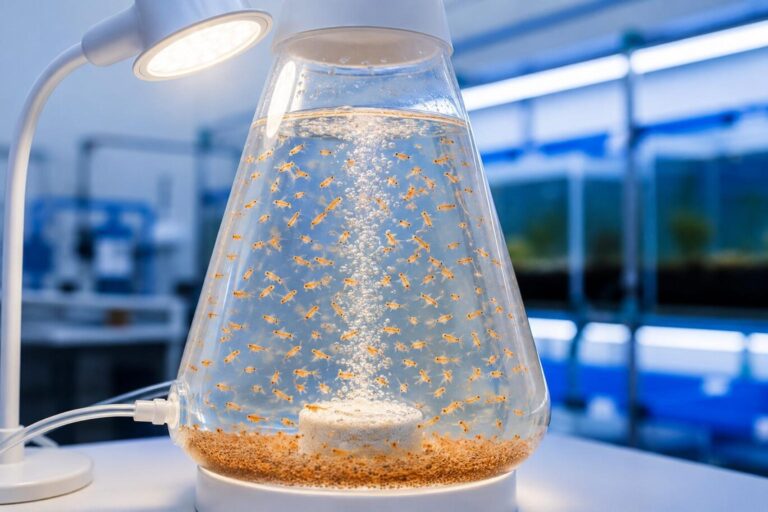
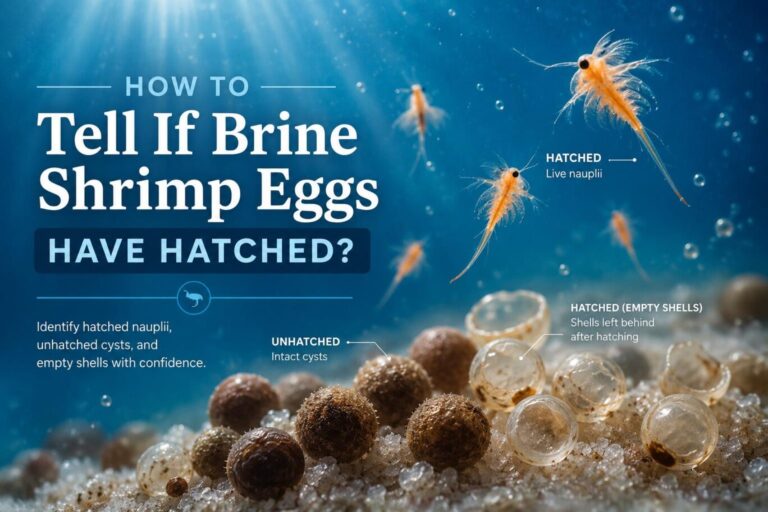
After hatching, turn off aeration for a short time. Empty shells will usually float, unhatched eggs may sink, and live nauplii will swim toward light. Use a focused light source to guide nauplii to one area for collection.
This simple method helps improve both hatch visibility and harvest efficiency.
How to Know If Light Is Helping Your Hatch
If you want to test whether light is improving your hatch, run a simple comparison.
Use the same batch of eggs, the same salinity, the same temperature, and the same aeration. Hatch one container with continuous light and one container with low light or darkness. After 24–36 hours, compare the number of active nauplii.
If the lighted container produces more active nauplii or hatches faster, light is helping your specific setup.
For hatcheries and farms, this kind of small test can help set a standard operating procedure before scaling up to larger hatching volumes.
Best Practice for Commercial Users
For commercial users, the question should not be “Can the eggs hatch without constant light?” The better question is:
Which setup gives the most stable hatch rate every day?
In aquaculture, consistency matters. Larvae need live feed at the right time. If nauplii hatch too late, too early, or unevenly, feeding schedules become harder to control.
For this reason, hatcheries often use continuous illumination as part of a complete hatching protocol. Light is not used alone. It is combined with controlled temperature, strong aeration, correct salinity, proper cyst density, and reliable egg storage.
For buyers of Artemia cysts, stable hatch performance should be considered together with origin, batch quality, packaging, storage, and supplier reliability.
Zezhiheng Artemia: Supporting More Reliable Brine Shrimp Egg Hatching
At Artemia Zezhiheng, we supply brine shrimp eggs for hatcheries, aquaculture farms, aquarium feed suppliers, distributors, and live-feed users who need dependable hatching performance.
Different users have different requirements. Some need standard shell-on brine shrimp eggs for routine hatching. Some prefer decapsulated or decapsulation-ready eggs for cleaner operation and reduced shell waste. Some buyers care most about hatch rate, while others need stable bulk supply and batch consistency.
Our team helps customers choose suitable Artemia cyst products based on practical use, including:
Hatching method
Target hatch time
Live-feed application
Storage conditions
Order volume
Market requirements
Whether you are feeding fish fry, shrimp larvae, crab larvae, or aquarium species, the right brine shrimp eggs and the right hatching method work together.
Conclusione
So, do uova di artemia salina need constant light to hatch?
They do not always need perfect constant light to hatch, but continuous illumination is strongly recommended for more stable and predictable results.
Light can stimulate hatching, help nauplii gather after hatching, and make harvesting easier. But light alone will not fix poor temperature, low oxygen, wrong salinity, overcrowded eggs, or low-quality cysts.
For the best results, treat light as one part of a complete hatching system:
Temperatura stabile
Correct salinity
Strong aeration
Good egg quality
Clean hatching container
Continuous moderate illumination
When these factors work together, brine shrimp eggs can hatch more reliably and produce active nauplii for fish, shrimp, and other aquaculture larvae.
Domande frequenti
Do brine shrimp eggs hatch faster with light?
In many setups, yes. Light can help stimulate hatching and make the hatch more uniform. However, temperature and aeration often have a stronger effect on hatch speed.
Can I hatch brine shrimp eggs without a lamp?
Yes, small batches may hatch under normal room light, but results can be less predictable. A simple LED or fluorescent lamp is recommended for better consistency.
Should the light stay on at night?
During incubation, continuous light is commonly recommended. Keeping the light on through the full 24–36 hour hatching period is practical for most users.
Can too much light kill brine shrimp?
The bigger risk is usually overheating from strong lamps or direct sunlight. Use steady lighting that does not raise the water temperature too much.
What is the best light color for brine shrimp hatching?
White light is a practical choice. Newly hatched nauplii are attracted to light, which also makes collection easier.
Is light more important than aeration?
No. Aeration is essential because it supplies oxygen and keeps eggs suspended. Light helps, but poor aeration can seriously reduce hatch success.
Why are my brine shrimp eggs not hatching even with light?
Common reasons include low temperature, wrong salinity, weak aeration, old eggs, poor storage, overcrowding, or poor water quality. Check the full hatching setup instead of focusing only on light.

 English
  Español
  Tiếng Việt
  Bahasa Indonesia
  ไทย
ไทย  Bahasa Melayu
  বাংলা
বাংলা  Nederlands
  Italiano
  Français
  Deutsch
  العربية